
When the Default Mind Dies: Ego Dissolution and the Luminous Web
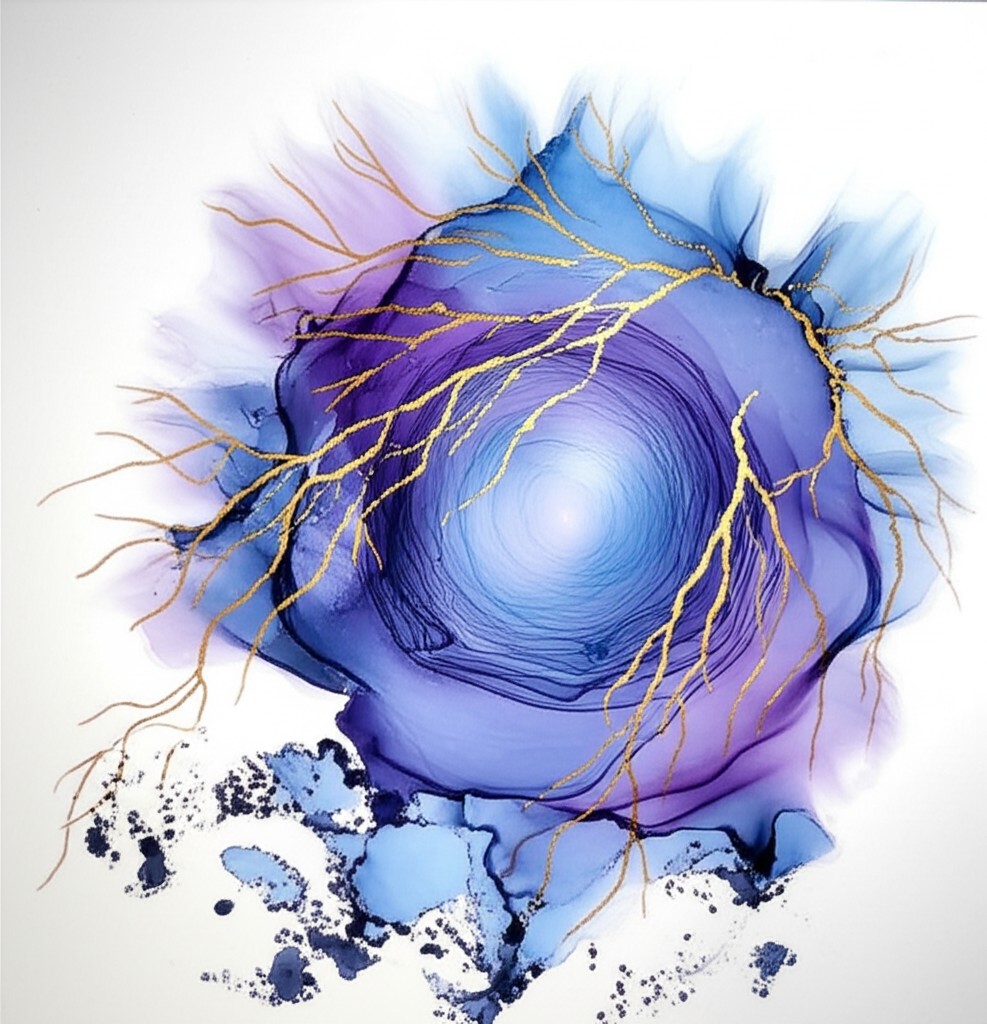
When the Default Mind Dies: Ego Dissolution and the Luminous Web
The room goes silent. Not the ordinary silence between thoughts, but the vast silence that remains when the thinker itself dissolves. After twenty-three minutes of watching the breath, something extraordinary happens in the brain — the default mode network, that constant chatter of self-referential narrative, finally goes offline. What emerges in that space is startling in its simplicity: pure awareness, luminous and interconnected, the very fabric that contemplatives recognize as the living field of consciousness.
This intersection of neuroscience and ancient wisdom reveals something profound about the nature of human consciousness.
The Network That Creates Suffering
The default mode network encompasses the medial prefrontal cortex, posterior cingulate cortex, and angular gyrus — brain regions that activate when we're not focused on external tasks. This network generates our sense of self, our autobiographical narrative, our endless mental time travel between regrets about the past and anxieties about the future. It is the neurological substrate of what Vedantic philosophy calls ahamkara — the ego-mind that creates the illusion of separation.
Research shows that experienced meditators display dramatically decreased default mode network activity compared to non-meditators. More remarkably, the degree of deactivation correlates directly with years of practice and subjective reports of ego dissolution. When the default mode network goes quiet, the boundaries between self and world begin to dissolve.
This dissolution is not pathological. It is revelatory.
What Neuroscience Misses: The Luminous Field
Conventional neuroscience can measure the silence — the decreased activity in the posterior cingulate, the reduced connectivity between self-referential nodes. But it cannot measure what contemplatives discover in that silence: the luminous energy field that shamans call kawsay, yogis call prana, and mystics across traditions recognize as the ground of being itself.
In shamanic understanding, this field is not something produced by the brain, but something the brain learns to perceive when its habitual filters dissolve. The default mode network, in this view, is like a radio constantly tuned to the ego station, drowning out the cosmic background radiation of pure awareness.
What if consciousness is not generated by individual brains but is the field in which all experience arises?
The Interoceptive Gateway
The path to ego dissolution begins in the body. Research on the interoceptive nervous system reveals how awareness of internal bodily states — the heartbeat, the breath, the subtle energetic currents yogis call nadis — provides a direct pathway to consciousness that bypasses the ego's narrative machinery.
When practitioners engage in pranayama — particularly techniques like nadi shodhana (alternate nostril breathing) — they're training the insula, the brain's interoceptive processing center, to become exquisitely sensitive to the body's energetic field. This heightened interoception creates what neuroscientists call embodied awareness — a pre-cognitive knowing that exists before the ego can claim it as "mine."
The shamanic practice of munay (unconditional love) operates through similar mechanisms. By placing attention on the heart center while releasing attachment to outcomes, practitioners activate the vagal pathways that connect cardiac rhythms to the brain's emotional processing centers, creating coherence between heart and mind that transcends ordinary self-centered awareness.
The Neurobiology of Awe: When Vastness Breaks the Frame
Studies demonstrate that awe experiences reliably shrink activity in the default mode network while expanding feelings of connection to something larger than the self. Whether triggered by natural beauty, profound music, or the direct perception of consciousness itself, awe creates what researchers call "cognitive accommodation" — a restructuring of mental frameworks to incorporate vastness.
This is precisely what happens in advanced meditation states. The practitioner encounters the infinite expanse of awareness itself — what the Mandukya Upanishad calls turiya, the fourth state beyond waking, dreaming, and deep sleep. The default mode network, designed to maintain the boundaries of a separate self, cannot accommodate this vastness. It must dissolve.
In that dissolution, we discover what shamans have always known: consciousness is not produced by individual brains but is the field in which all experience arises. The ego is not eliminated but revealed as a temporary configuration within this larger field — like a wave recognizing itself as ocean.
The Clinical Revolution: Psychedelics as Default Mode Disruptors
Recent research on psychedelics provides crucial insights into ego dissolution. Studies show that substances like psilocybin and LSD create profound default mode network suppression, temporarily dissolving the ego's grip on perception and revealing the interconnected nature of consciousness.
Research at Johns Hopkins and Imperial College London demonstrates that psychedelic experiences can create lasting reductions in default mode network activity, corresponding to decreased depression, increased openness, and enhanced feelings of unity. The medicine creates what indigenous shamans call "soul retrieval" — a return to our original wholeness before the ego's fragmenting narratives took hold.
But psychedelics are not the only path to these states. Contemplative traditions offer reliable technologies for ego dissolution: samadhi in yoga, rigpa in Dzogchen, the via negativa in Christian mysticism, fana in Sufism. All point toward the same neurobiological event — the temporary suspension of self-referential processing that allows consciousness to recognize its own nature.
The Practice: Dying Before Death
True meditation is a practice of ego death — what the mystics call "dying before you die." Each time we return attention from thought to breath, from narrative to presence, from separation to unity, we're weakening the default mode network's grip on consciousness.
Consider beginning with shavasana — corpse pose. Lie completely still and allow the body to dissolve first. Notice how the boundaries between self and space begin to blur when physical tension releases.
Move to breath awareness, specifically the pause between exhale and inhale — what yogis call bahya kumbhaka. In this space between breaths, the ego has nothing to grasp. The default mode network goes momentarily offline.
Finally, rest in pure awareness itself — not awareness of something, but awareness aware of itself. This is the luminous field that shamans journey to encounter, the Atman of Vedantic wisdom, the clear light of consciousness that neuroscience can measure but never fully explain.
Integration: Living from the Luminous Web
The goal is not to remain in ego-dissolved states — we need the default mode network for navigation, planning, and relationship. The goal is to recognize these states as revelatory of our true nature, then integrate that recognition into ordinary consciousness.
This integration happens through what shamans call "walking in beauty" — maintaining awareness of the luminous field while engaging fully with the world of form. It's the bodhisattva ideal of nirvana and samsara as one seamless reality.
When the default mode network comes back online — as it must — it can return informed by its encounter with vastness. The ego remains functional but no longer absolute. We can use the self without being used by it.
What would it mean to live from this understanding? To move through the world knowing yourself as both wave and ocean?
The Great Recognition
The ancient wisdom traditions were mapping consciousness long before we had brain scanners. Now neuroscience confirms what contemplatives have always known: the separate self is a construction, consciousness is far more vast than we typically imagine, and ego dissolution is not madness but perhaps the most sane thing a human being can experience.
In the silence beyond the default mind, we discover what we have always been: not separate waves but the ocean itself, temporarily forgetting its own wetness until the wave dissolves back into its source.
The yogic tradition teaches that this recognition — pratyabhijna or "sudden recognition" — is always available. The shamanic path shows us that we are always already embedded in the web of life. Modern neuroscience reveals the brain mechanisms that can either obscure or reveal this fundamental truth.
The invitation is simple: step into the silence beyond the thinking mind and discover what remains when the thinker dissolves.
To explore your own relationship with ego dissolution and consciousness expansion, consider beginning with a simple breath awareness practice or connecting with a qualified meditation teacher who can guide your journey into these profound states.
Frequently Asked Questions
Is ego dissolution dangerous or a sign of mental illness?
Ego dissolution in the context of contemplative practice is not pathological but revelatory. Unlike psychotic episodes where reality testing is impaired, meditative ego dissolution maintains awareness and typically increases psychological well-being. However, it should be approached gradually with proper guidance, especially for those with trauma histories or psychiatric conditions.
How long does it take to experience default mode network deactivation in meditation?
Research shows that even novice meditators can experience brief default mode network deactivation within 10-20 minutes of focused practice. However, stable ego dissolution states typically require months to years of consistent practice. The key is not forcing these states but creating conditions for them to arise naturally.
Can these consciousness states be achieved without meditation through other practices?
Yes. Breathwork (pranayama), ecstatic dance, vision quests, sensory deprivation, and even intense physical practices like rock climbing can trigger default mode network suppression and ego dissolution. The common factor is sustained present-moment awareness that interrupts the ego's narrative machinery.
Vishnu Das (William Le)
Wellness coach with over a decade of emergency and rural medicine experience. Certified yoga instructor and shamanic wisdom practitioner. Vishnu Das bridges functional wellness, yogic philosophy, and earth-based healing traditions to help clients find the root patterns — and the deeper meaning — of their health journey.
Learn moreThis article was written with the assistance of AI under the editorial oversight of Vishnu Das (William Le). All information is reviewed for accuracy, but this content is for educational purposes only and does not constitute medical advice. Always consult a qualified healthcare provider for medical concerns.
Continue Reading
When the Ego's Electric Grid Goes Dark: What Float Tanks Reveal About Memory
Accidental sensory deprivation unlocks the body's deepest healing intelligence—but only when consciousness stops interfering with what wants to emerge.
The Grief Paradox: Why Honoring Death Activates Your Body's Repair Code
Cultures that embrace death live longer. Here's the neurobiological reason why grief, when honored rather than suppressed, triggers dormant DNA repair sequences.
The EEG of Enlightenment: Reading Brainwaves as Consciousness Transforms
Twelve years of watching sleep lab monitors taught me to read delta waves and REM cycles. Then my own awakening showed me what the machines can't measure.
Your Healing Journey Starts Here
Book a complimentary Discovery Call to explore root-cause wellness with an experienced guide.
Book a Discovery Call