
When Awakening Breaks Your Nervous System: The Biology of Spiritual Crisis
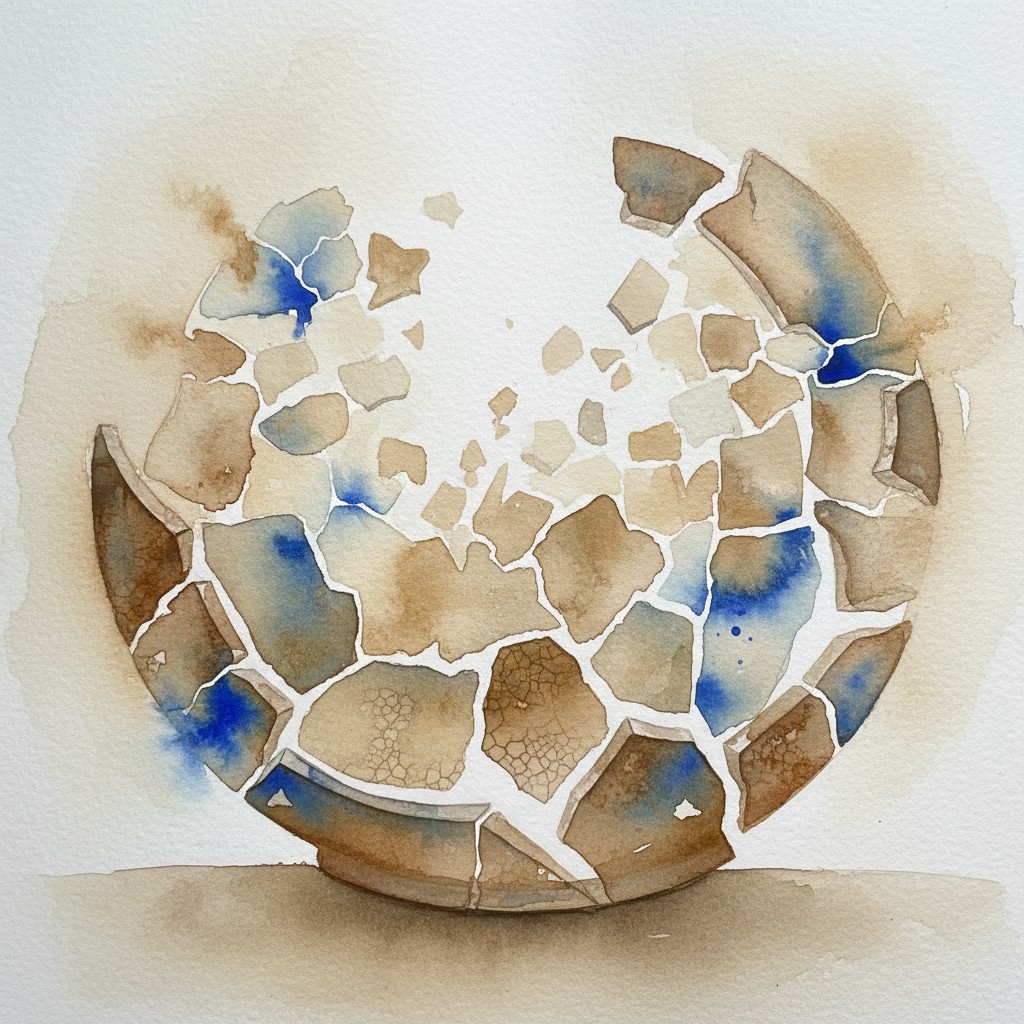
The woman sits in the emergency department at 3 AM, pupils dilated, hands trembling, describing how her meditation retreat three days ago "cracked something open" and now she can't sleep, can't eat, feels like her skin is crawling with electricity. Her cortisol is through the roof. Her circadian rhythm has completely collapsed. She's oscillating between states of cosmic unity and existential terror every few hours.
The attending physician wants to prescribe antipsychotics. The woman's meditation teacher says she's having a "breakthrough." Both are wrong. Both are right.
What's happening in her nervous system isn't pathology. It isn't enlightenment either. It's reorganization — consciousness upgrading its operating system while the body pays the metabolic price of transformation.
Spiritual emergency creates a specific neurobiological signature that Western medicine typically pathologizes and spiritual communities often romanticize. Neither response serves the person whose autonomic nervous system is literally rewiring itself in real time. The sympathetic branch gets stuck in hyperactivation while the parasympathetic struggles to engage. Sleep architecture fragments. The hypothalamic-pituitary-adrenal axis floods the system with stress hormones that would be appropriate for escaping a predator but become toxic when sustained for weeks.
Research from Willoughby Britton's lab at Brown University documents the specific adverse effects of intensive meditation practice: depersonalization, emotional dysregulation, cognitive impairment, and what practitioners describe as "energy overload." These aren't side effects. They're the biological cost of consciousness attempting to reorganize its relationship to embodied existence.
The yogic tradition calls this state kundalini syndrome — the serpent energy rising too quickly through the sushumna nadi, overwhelming the nervous system's capacity to integrate the activation. The Yoga Sutras describe vikshipta — the scattered mind that oscillates between concentration and distraction — as a natural stage in consciousness development, not a pathological deviation.
Shamanic cultures recognize this pattern as the classic signature of the wounded healer's initiation. In the Four Winds tradition, practitioners understand that accessing the luminous energy field sometimes requires the dismantling of ordinary perception. The hucha (heavy energy) that gets released during spiritual opening can overwhelm someone whose energy body lacks the structural integrity to process the activation.
But here's what both ancient wisdom and modern neuroscience agree on: the crisis itself contains the medicine.
The same neuroplasticity that creates the destabilization also enables the reorganization. The cortisol spikes that feel like torture are also promoting synaptic pruning — literally reshaping neural networks to support expanded awareness. The circadian disruption that destroys normal sleep patterns is also dismantling the brain's default mode network, the neural substrate of the separate self.
The person in spiritual emergency needs three things that neither psychiatric medication nor spiritual platitudes provide: nervous system regulation, somatic grounding, and someone who understands that what looks like breakdown might be breakthrough attempting to emerge through a system unprepared for its own transformation.
Grounding becomes the primary intervention. Vrksasana (tree pose) practiced barefoot on earth literally discharges excess electrical activation through the feet. Cold water on the face and wrists activates the mammalian dive reflex, instantly downregulating sympathetic arousal. Nadi shodhana (alternate nostril breathing) rebalances the autonomic nervous system by activating parasympathetic tone through the vagus nerve.
The shamanic approach focuses on energy hygiene. Practitioners learn to work with their mesa (medicine bundle) to create energetic boundaries, to call back soul parts that have become scattered during the opening, to distinguish between their own energy field and the cosmic downloads they're receiving. The goal isn't to stop the process but to create enough structural integrity to let it unfold safely.
Functional medicine addresses the metabolic chaos. B-complex vitamins support the nervous system's increased energetic demands. Magnesium glycinate helps restore normal sleep architecture. Adaptogenic herbs like ashwagandha and rhodiola help the HPA axis recalibrate without suppressing the transformative process.
The integration phase requires understanding that consciousness evolution isn't linear. The Bhagavad Gita describes arjuna vishada — Arjuna's despair on the battlefield — as the necessary precursor to spiritual awakening. Sometimes the psyche must completely fall apart before it can reorganize at a higher level of complexity.
What emergency departments call "acute psychosis" might be what mystics call "ego death" — the temporary dissolution of the sense of separate self that feels like annihilation to the personality but registers as liberation to consciousness itself. The key is creating enough safety and support for the process to complete its cycle rather than getting stuck in chronic destabilization.
The person whose spiritual opening has overwhelmed their nervous system isn't broken. They're updating. The question isn't whether to pathologize or spiritualize the experience. The question is whether they have enough support — biological, emotional, energetic — to let the transformation complete itself without destroying the vehicle it's attempting to upgrade.
Practical Support Protocol:
Immediate grounding: Earth contact, cold water, weighted blankets, pranayama focused on lengthening exhales
Nervous system support: Magnesium, B-vitamins, adaptogenic herbs, circadian rhythm restoration
Energy hygiene: Boundaries, protection practices, distinguishing personal energy from cosmic downloads
Integration support: Someone who understands spiritual emergency, framework for making meaning, patience with the non-linear process
Spiritual emergency isn't a medical condition or a spiritual achievement. It's consciousness attempting to evolve through a nervous system that needs support to handle the upgrade. When that support is present, what looks like crisis becomes the biological foundation for authentic transformation.
If you're supporting someone in spiritual emergency — or experiencing it yourself — remember that the goal isn't to stop the process but to create enough safety for it to unfold. Sometimes the most profound healing happens when we stop trying to fix the breakdown and start supporting the breakthrough that's trying to emerge.
Frequently Asked Questions
How do I know if someone is having a spiritual emergency versus a psychiatric crisis?
Spiritual emergency typically includes mystical content, occurs after spiritual practice or spontaneously, and the person often maintains some insight into their experience. However, the two can overlap significantly. The key is providing immediate nervous system support and safety while getting qualified assessment from someone familiar with both spiritual and psychiatric presentations.
Can spiritual emergency cause permanent damage to the nervous system?
Research shows that while spiritual emergency can cause temporary disruption to sleep, cognition, and emotional regulation, the nervous system's neuroplasticity allows for recovery and often enhancement when proper support is provided. The same mechanisms that create destabilization also enable reorganization at higher levels of complexity.
What's the difference between spiritual emergency and kundalini syndrome?
Kundalini syndrome is a specific type of spiritual emergency characterized by energy sensations, heat, involuntary movements, and overwhelming activation following spiritual practices. All kundalini syndrome is spiritual emergency, but not all spiritual emergency involves kundalini activation. Both require similar support approaches focused on grounding and nervous system regulation.
Vishnu Das (William Le)
Wellness coach with over a decade of emergency and rural medicine experience. Certified yoga instructor and shamanic wisdom practitioner. Vishnu Das bridges functional wellness, yogic philosophy, and earth-based healing traditions to help clients find the root patterns — and the deeper meaning — of their health journey.
Learn moreThis article was written with the assistance of AI under the editorial oversight of Vishnu Das (William Le). All information is reviewed for accuracy, but this content is for educational purposes only and does not constitute medical advice. Always consult a qualified healthcare provider for medical concerns.
Continue Reading
When the Ego's Electric Grid Goes Dark: What Float Tanks Reveal About Memory
Accidental sensory deprivation unlocks the body's deepest healing intelligence—but only when consciousness stops interfering with what wants to emerge.
The Grief Paradox: Why Honoring Death Activates Your Body's Repair Code
Cultures that embrace death live longer. Here's the neurobiological reason why grief, when honored rather than suppressed, triggers dormant DNA repair sequences.
The EEG of Enlightenment: Reading Brainwaves as Consciousness Transforms
Twelve years of watching sleep lab monitors taught me to read delta waves and REM cycles. Then my own awakening showed me what the machines can't measure.
Your Healing Journey Starts Here
Book a complimentary Discovery Call to explore root-cause wellness with an experienced guide.
Book a Discovery Call