
When Plants Remember What Molecules Forget: The Epigenetic Rebellion
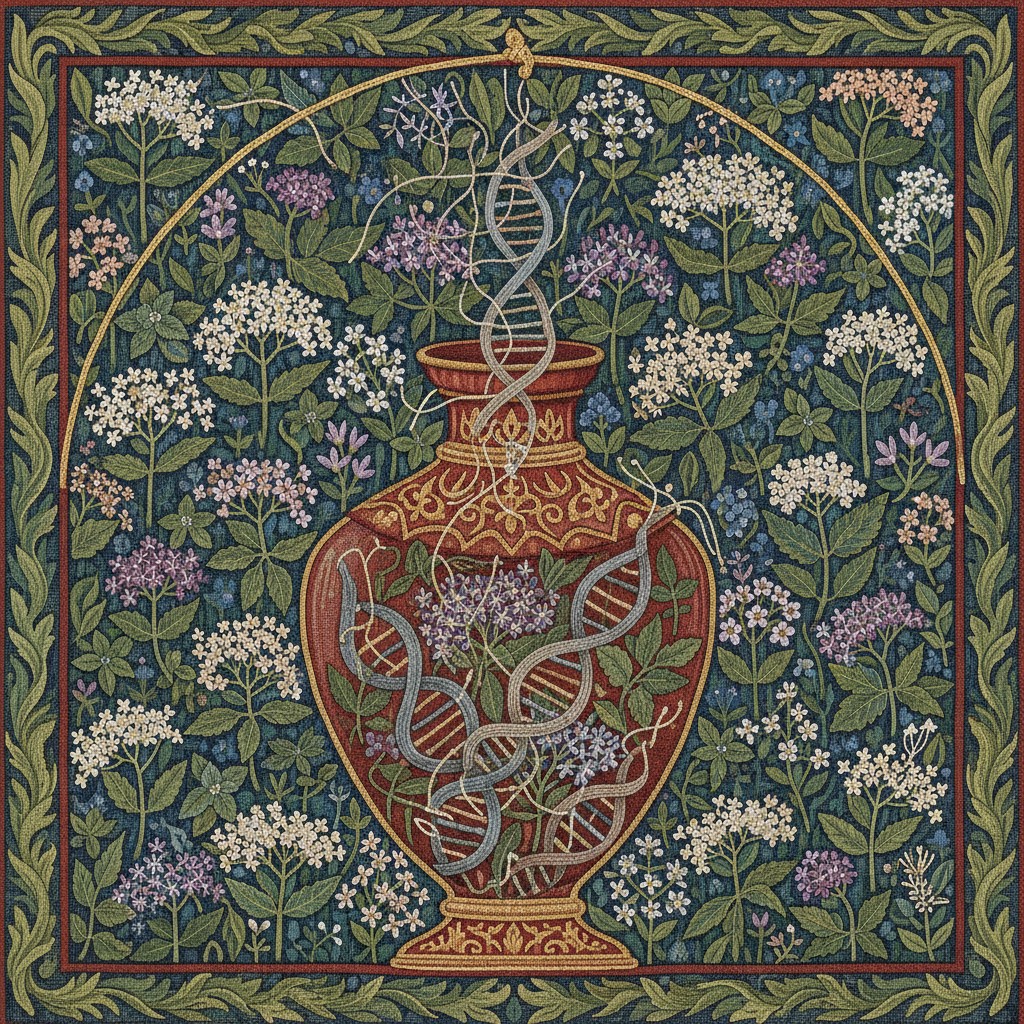
For twelve years, the laboratory became a morgue. Grinding elderberries into standardized anthocyanin extracts. Isolating menthol from peppermint, discarding the 'inactive' compounds that made up ninety percent of the plant's chemical signature. Reducing Sambucus nigra—the European elder that Hippocrates called his medicine chest—to cyanidin-3-glucoside percentages and ORAC values.
The reductionist mind believed it was purifying medicine. Extracting the 'active' from the 'inert.' Creating pharmaceutical precision from botanical chaos.
Until an old grandmother in the Peruvian highlands quietly asked why Western scientists always kill the plant to understand it.
The Great Molecular Divorce
Modern phytochemistry operates like a divorce attorney, meticulously dividing a unified intelligence into separate assets. Take elderberry's viral defense system—research focuses obsessively on how isolated anthocyanins inhibit neuraminidase, the same target as pharmaceutical Tamiflu. The studies are elegant: cyanidin-3-glucoside binds viral hemagglutinin, blocking cellular entry. Quercetin derivatives prevent viral replication.
But these same compounds behave entirely differently when the plant's full intelligence remains intact.
Whole elderberry activates what researchers call 'cytokine enhancement'—a coordinated immune symphony involving IL-1beta, TNF-alpha, IL-6, and IL-8. This isn't the crude inflammatory cascade that isolated compounds trigger. It's a precisely orchestrated cellular conversation that the plant has been having with human DNA for thousands of years.
The difference shows up in the epigenome—the molecular switches that determine which genes express and which remain dormant. Isolated anthocyanins might suppress NF-kappaB inflammatory pathways. But whole elderberry awakens dormant genetic programs for viral recognition that single compounds could never access.
Shamanic traditions recognize this as the difference between hucha and sami—heavy energy versus refined energy. When you fragment a plant into isolated molecules, you create hucha. The medicine becomes dense, mechanical, divorced from the luminous intelligence that originally created it.
The Intelligence That Molecules Cannot Carry
Peppermint reveals this even more dramatically. The reductionist mind fixates on menthol content—typically 35-45% of the essential oil. Menthol activates TRPM8 cold receptors, creating the cooling sensation. It relaxes smooth muscle through calcium channel modulation. Clean, measurable, reproducible.
Except menthol alone doesn't heal irritable bowel syndrome. Enteric-coated peppermint oil does—but only when it contains the full spectrum of compounds that pharmaceutical standardization typically discards. Menthone, menthyl acetate, 1,8-cineole, pulegone—the 'inactive' constituents that carry the plant's complete message.
Yogic medicine understood this through the concept of rasa—taste as medicine. Peppermint's katu (pungent) and sheeta (cooling) qualities create a paradox that pure menthol cannot replicate. The plant teaches the body how to be simultaneously warming and cooling, stimulating and calming. This isn't biochemical contradiction—it's sophisticated cellular education.
The Vedantic tradition calls this sahaja—the natural state where apparent opposites reveal themselves as complementary expressions of a unified intelligence. Peppermint embodies this principle at the molecular level. But only when its intelligence remains whole.
Research confirms what indigenous plant medicine has always known: whole-plant preparations activate different genetic pathways than isolated compounds. Elderberry's full spectrum triggers genes involved in antiviral immunity that purified anthocyanins never touch. Peppermint's complete chemical signature modulates gut-brain axis communication through pathways that menthol alone cannot access.
This is the epigenetic rebellion—dormant genetic programs awakening in response to plant intelligence that millions of years of co-evolution have encoded in our DNA.
The Ancestral Conversation
Somewhere in our genetic memory lies the blueprint for this conversation. Before laboratories existed, before molecules had names, human beings and plants developed an intricate chemical dialogue. Plants learned to encode healing information in complex molecular signatures. Human cells learned to recognize and respond to these signatures as teachers, not just chemical inputs.
The Four Winds tradition speaks of the luminous energy field—the template that organizes biological form. Plants carry their own luminous signatures, information patterns that extend far beyond their physical chemistry. When shamanic practitioners work with plant allies, they're engaging this larger intelligence, the field of information that gives molecules their meaning.
Modern epigenetics is beginning to map this territory. Researchers have discovered that plant compounds can activate longevity genes, enhance autophagy, modulate circadian rhythms, and even influence telomerase activity—but only when the plant's full intelligence remains intact.
Isolated resveratrol shows modest effects on SIRT1 longevity pathways. But whole grape skin extract—containing resveratrol plus hundreds of 'inactive' polyphenols—activates entire gene networks involved in cellular repair and regeneration. The difference isn't additive. It's exponential.
This suggests something profound: plants don't just contain medicine. They are medicine. Their intelligence, encoded in molecular symphonies too complex for reductionist analysis, carries information that awakens cellular memories we didn't know we possessed.
The Reintegration
The path forward requires what the yogic tradition calls pratyahara—withdrawal from sensory fragmentation to perceive the unified whole. In plant medicine, this means learning to read botanical intelligence as our ancestors did: not as collections of isolated compounds, but as complete teachers carrying wisdom encoded across millennia of co-evolution.
Functional medicine practitioners are rediscovering this. They're finding that standardized herbal extracts often fail where whole-plant preparations succeed. The difference lies in what indigenous traditions have always known: healing happens in relationship, not isolation.
When we work with whole plants, we engage what the Vedantic tradition calls the annamaya kosha—the food body that extends beyond physical nutrition into information exchange. Plants become teachers, offering their intelligence to awaken genetic potentials that isolated molecules could never access.
This doesn't diminish the value of phytochemical research. Understanding how elderberry's anthocyanins inhibit viral neuraminidase deepens appreciation for the plant's intelligence. But it's not the complete story. The complete story lives in the conversation between human consciousness and plant wisdom—a dialogue that laboratory extraction inevitably fragments.
The future of plant medicine lies not in better extraction techniques, but in better listening. Learning to receive the full intelligence that plants offer. Allowing their molecular wisdom to awaken the dormant genetic programs that remember how to heal.
Because in the end, the molecules don't remember. The plants do. And they're waiting for us to remember with them.
Ready to explore how whole-plant intelligence might awaken dormant healing pathways in your own body? Consider which plants are calling to you as teachers, not just sources of isolated compounds.
Frequently Asked Questions
How do whole plants activate different genes than isolated compounds?
Whole plants contain hundreds of compounds that work synergistically to activate gene networks that isolated molecules cannot access. For example, whole elderberry activates antiviral gene programs that purified anthocyanins alone never trigger. This happens through complex molecular signaling that requires the plant's full chemical intelligence, not just its 'active' compounds.
Is there scientific evidence for plant intelligence beyond chemistry?
Emerging research in plant signaling, quantum biology, and biofield science suggests plants carry information patterns that extend beyond their molecular chemistry. Studies show whole-plant preparations consistently outperform isolated compounds in activating cellular repair pathways, suggesting plants encode healing wisdom in ways that reductionist analysis cannot fully capture.
How can practitioners work with whole-plant intelligence?
Start by choosing whole-plant preparations over standardized extracts when possible. Learn about plants as complete beings with their own intelligence rather than sources of isolated compounds. Consider traditional preparation methods like slow decoctions or fresh plant tinctures that preserve the plant's full molecular signature and energetic integrity.
Vishnu Das (William Le)
Wellness coach with over a decade of emergency and rural medicine experience. Certified yoga instructor and shamanic wisdom practitioner. Vishnu Das bridges functional wellness, yogic philosophy, and earth-based healing traditions to help clients find the root patterns — and the deeper meaning — of their health journey.
Learn moreThis article was written with the assistance of AI under the editorial oversight of Vishnu Das (William Le). All information is reviewed for accuracy, but this content is for educational purposes only and does not constitute medical advice. Always consult a qualified healthcare provider for medical concerns.
Continue Reading
Children as Bioelectric Antennas: Why Young Nervous Systems Inherit Frequencies
The developing nervous system doesn't just inherit genes—it receives ancestral electromagnetic imprints that either fragment or heal consciousness across generations.
The Orchestra Effect: Why Isolated Compounds Fail Where Whole Plants Heal
Traditional herbal constituents act as molecular keys unlocking dormant genetic programs—revealing why whole plant medicines succeed where isolated pharmaceuticals fail.
The Sacred Masculine Under Siege: Why Declining Testosterone Is Cellular Wisdom
You've been told low testosterone is hormonal failure. What if it's your body's attempt to protect consciousness from a world that fragments masculine essence?
Your Healing Journey Starts Here
Book a complimentary Discovery Call to explore root-cause wellness with an experienced guide.
Book a Discovery Call