
The Electric Serpent: How Bioelectric Medicine Awakens Ancient Healing
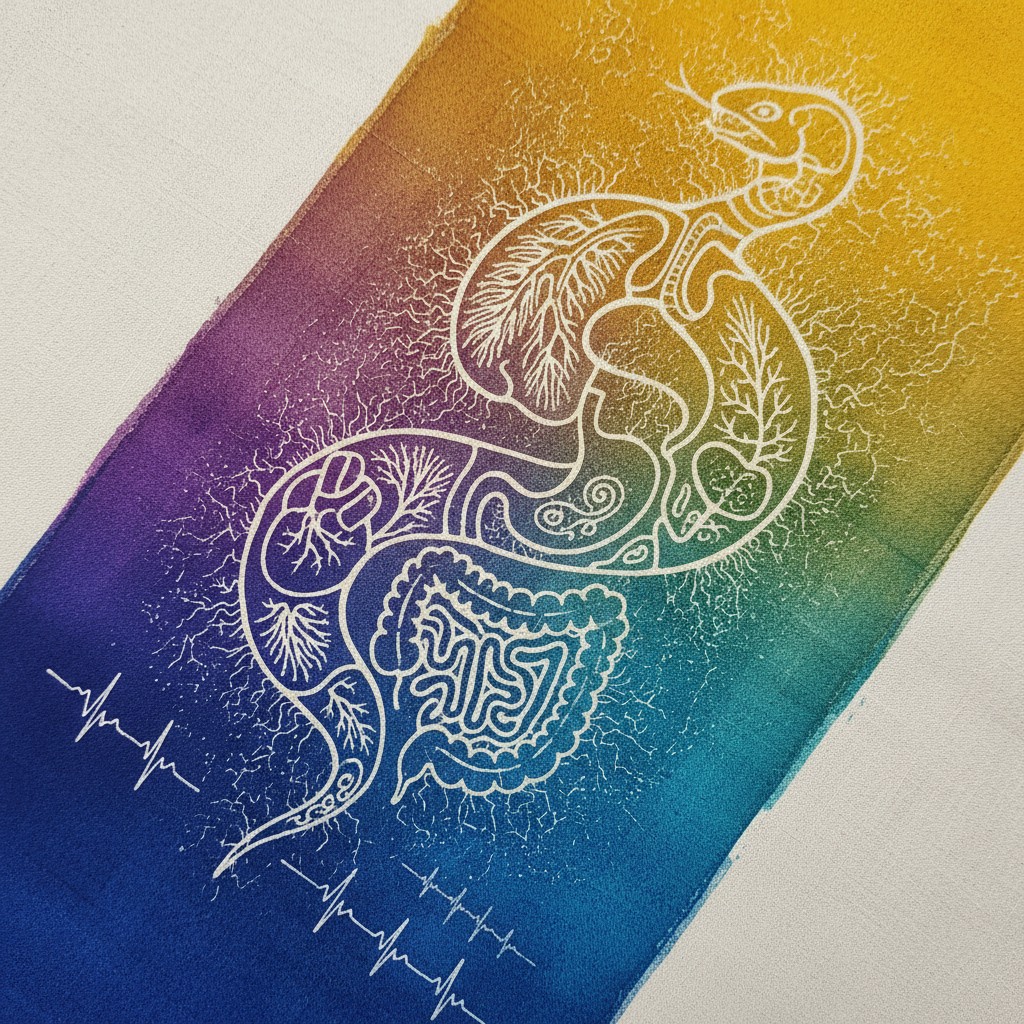
In the cardiac intensive care unit at 3 AM, the monitors pulse with electrical rhythms that would make an Apache medicine keeper nod in recognition. Each heartbeat traces an arc of bioelectricity across the screen—the same serpentine current that indigenous healers have mapped for millennia as the body's primary healing force. The machines keeping patients alive are crude technological mimicries of what the vagus nerve accomplishes naturally: electrical stimulation that resets the nervous system and commands the body back to life.
The tenth cranial nerve carries signals that would be familiar to any practitioner trained in the Four Winds tradition. This wandering pathway—vagus means wanderer—snakes from brainstem to belly, touching heart, lungs, stomach, and intestines. Exactly the route that Andean healers trace when working with the serpent energy of the South, the electrical life force that governs physical healing.
When neurosurgeon Kevin Tracey discovered the inflammatory reflex in 2000, he unknowingly validated what shamanic practitioners have understood for centuries: the body contains an electrical reset button. Tracey found that stimulating the vagus nerve suppresses tumor necrosis factor alpha, interleukin-1, and interleukin-6—the inflammatory cytokines that drive autoimmune disease, sepsis, and chronic inflammation. The vagus nerve literally talks the immune system out of attacking itself.
This is serpent medicine at the molecular level.
The yogic understanding adds another layer of precision. When Patanjali described pranayama in the Yoga Sutras, he was mapping the same electrical pathway that cardiac monitors now trace. The vagus nerve mediates respiratory sinus arrhythmia—the heart rate variability that increases with each slow exhale. Ancient yogis called this rechaka: the controlled exhalation that activates the parasympathetic nervous system and shifts consciousness from rajas (agitation) to sattva (clarity).
Modern bioelectric medicine has created devices that can stimulate this pathway directly. Vagus nerve stimulators—originally implanted surgically for epilepsy—now come in transcutaneous versions that clip to the ear or press against the neck. These devices deliver precisely calibrated electrical pulses at 25 Hz, mimicking the natural firing rate that produces maximum parasympathetic activation.
But here's where the technology reveals its shamanic wisdom: the most effective vagal stimulation happens when the patient breathes slowly during treatment. The machines work best when combined with conscious breathing. The electrical serpent awakens fully only when paired with prana.
Research shows that vagus nerve stimulation increases GABA production while reducing glutamate activity—shifting the brain from excitation to inhibition. This neurochemical change mirrors what happens during ujjayi pranayama, the victorious breath that yogis use to access deeper states of consciousness. The sound of ujjayi itself—that oceanic breathing—creates vibrations in the throat that mechanically stimulate the vagus nerve.
In the Four Winds tradition, this would be recognized as working with both sami (refined energy) and hucha (heavy energy) simultaneously. The electrical stimulation clears hucha from the nervous system while the conscious breathing cultivates sami. The technology amplifies what ceremony has always accomplished: energetic cleaning and restoration.
The serpent energy governs more than inflammation. Vagal stimulation increases heart rate variability—a biomarker that correlates with emotional regulation, stress resilience, and longevity. People with higher vagal tone recover faster from trauma, show better immune function, and maintain stable mood under stress. The electrical serpent literally determines how well the body can heal itself.
This explains why certain yogic practices have such profound physiological effects. Bhramari pranayama—the humming bee breath—creates vibrations that stimulate the vagus nerve through the inner ear. Kapalabhati—skull-shining breath—activates the sympathetic nervous system followed by a powerful parasympathetic rebound. These practices are bioelectric medicine disguised as spiritual technique.
The most accessible entry point requires no technology at all. The diving response—triggered by cold water on the face—instantly activates the vagus nerve through the trigeminal nerve pathway. This is why splashing cold water on the face can stop a panic attack. The mammalian diving reflex drops heart rate, increases heart rate variability, and shifts the nervous system into parasympathetic dominance within seconds.
For a more sustained practice, try resonance frequency breathing: inhale for 5.5 seconds, exhale for 5.5 seconds, maintaining this rhythm for 10-20 minutes. This breathing rate maximizes respiratory sinus arrhythmia and produces the strongest vagal activation measurable by heart rate variability monitors. The ancient yogis discovered this rhythm intuitively; modern technology simply confirmed its electrical signature.
The serpent energy awakens when we recognize that electricity and consciousness are not separate phenomena. Every thought generates an electrical field. Every emotion shifts the bioelectric patterns in the heart. Every breath modulates the electrical activity of the nervous system. The ICU monitors are simply making visible what shamans have always seen: the body as an electrical being whose healing depends on restoring its natural current.
When the machines finally come off and the patient breathes on their own, what returns is not just lung function—it's the electrical serpent, the vagal current that connects brainstem to belly, the bioelectric pathway that commands inflammation to cease and healing to begin. The same current that flows through transcutaneous stimulators, yogic breathing, and shamanic ceremony.
The electric serpent never left. We just needed technology sensitive enough to measure its presence.
Frequently Asked Questions
Can vagus nerve stimulation devices replace meditation and breathwork?
No—devices are most effective when combined with conscious breathing practices. Research shows that VNS produces maximum benefit when paired with slow, diaphragmatic breathing, suggesting that technology amplifies rather than replaces traditional practices.
How quickly can someone expect to see results from vagal tone improvement?
Heart rate variability changes can be measured within minutes of proper breathing techniques, but sustained improvements in inflammation, mood, and stress resilience typically require 4-8 weeks of consistent practice. The nervous system adapts gradually to new electrical patterns.
Are there contraindications for vagus nerve stimulation practices?
People with certain heart conditions, implanted devices like pacemakers, or a history of fainting should consult healthcare providers before using VNS devices or intensive breathwork. Cold water face immersion should be avoided by those with severe cardiac conditions.
Vishnu Das (William Le)
Wellness coach with over a decade of emergency and rural medicine experience. Certified yoga instructor and shamanic wisdom practitioner. Vishnu Das bridges functional wellness, yogic philosophy, and earth-based healing traditions to help clients find the root patterns — and the deeper meaning — of their health journey.
Learn moreThis article was written with the assistance of AI under the editorial oversight of Vishnu Das (William Le). All information is reviewed for accuracy, but this content is for educational purposes only and does not constitute medical advice. Always consult a qualified healthcare provider for medical concerns.
Continue Reading
Children as Bioelectric Antennas: Why Young Nervous Systems Inherit Frequencies
The developing nervous system doesn't just inherit genes—it receives ancestral electromagnetic imprints that either fragment or heal consciousness across generations.
The Orchestra Effect: Why Isolated Compounds Fail Where Whole Plants Heal
Traditional herbal constituents act as molecular keys unlocking dormant genetic programs—revealing why whole plant medicines succeed where isolated pharmaceuticals fail.
The Sacred Masculine Under Siege: Why Declining Testosterone Is Cellular Wisdom
You've been told low testosterone is hormonal failure. What if it's your body's attempt to protect consciousness from a world that fragments masculine essence?
Your Healing Journey Starts Here
Book a complimentary Discovery Call to explore root-cause wellness with an experienced guide.
Book a Discovery Call